Understand what retinol can and can’t do for acne scars, and when to consider professional treatments.

Get early access to new launches and promotions plus hints and tips on keeping your teeth healthy!
If you’ve ever had a breakout heal only to notice a mark or uneven texture left behind, you’re not alone.
Many people explore ingredients like retinol when looking for ways to support clearer, smoother-looking skin. Retinol has been widely studied and is commonly used in skincare for concerns such as uneven tone, texture and breakouts.
When it comes to acne scars, though, its role can vary. Different types of scars respond differently to topical products, and individual skin factors also play a part.
The information below explains how retinol works, where it may or may not be helpful, and when it may be appropriate to look into professional treatment options.
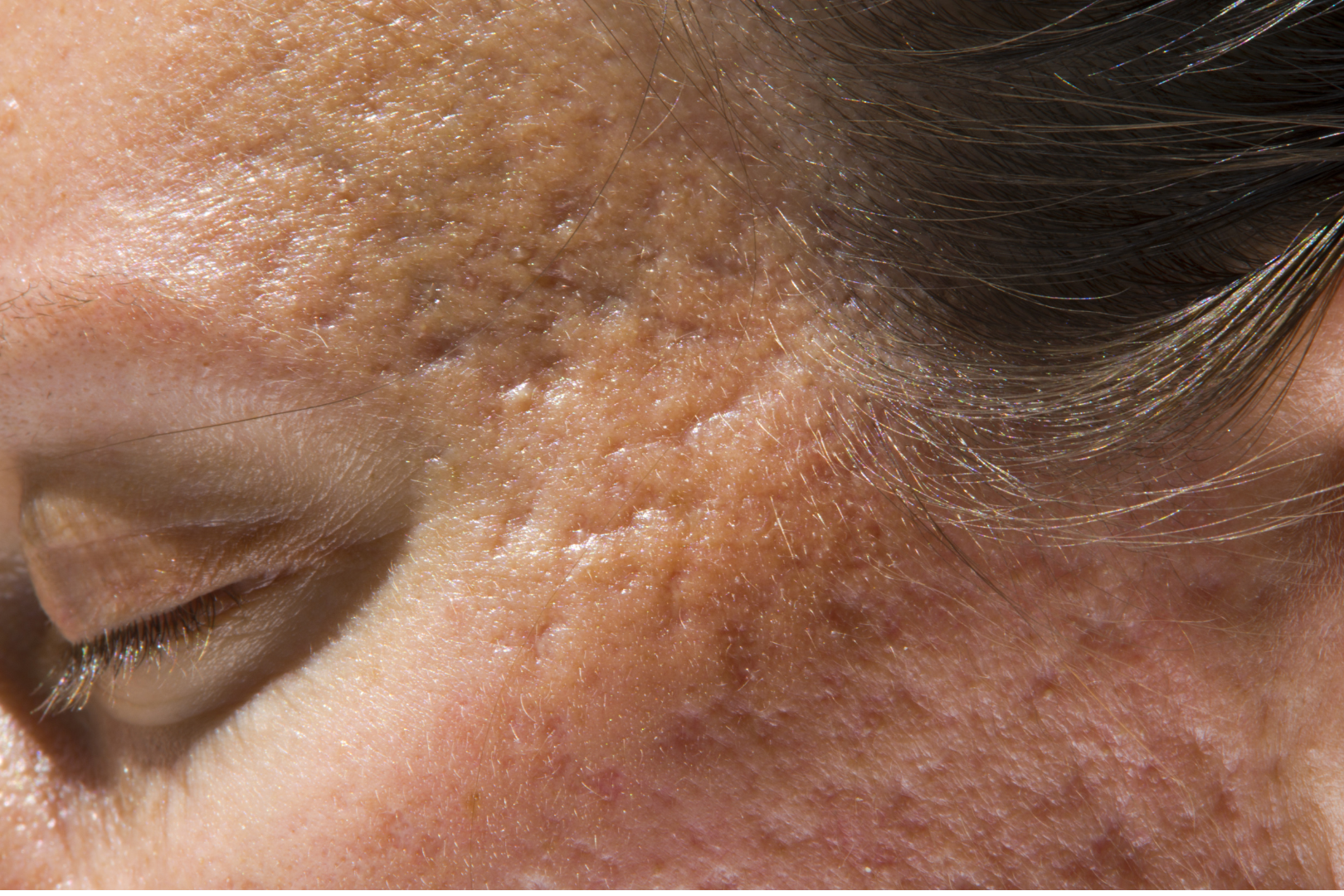
There are different types of acne scars and being able to identify which ones you have, helps you understand what treatments might actually work.
.png)
Post-inflammatory hyperpigmentation (dark spots)Flat brown or purple marks appear after inflammation. They aren’t true scars but can be stubborn and slow to fade. |
.png)
Atrophic scars (pitted or depressed)Happens when collagen is lost during healing. They include ice pick scars (tiny but deep), rolling scars (wave-like dips), and boxcar scars (round or oval indentations). |
.png)
Raised scars (hypertrophic)Less common, these develop when too much collagen forms, leaving a firm, raised bump. |
Some types of scars, especially dark spots and mild atrophic scars, respond to topical products like retinol. Others, such as deeper pitted scars, usually need more intensive treatments.
.png)
This is where retinol often comes into the picture. You’ve probably heard it praised as a “holy grail” ingredient, but what does it actually do when it comes to scars?
Retinol is a derivative of vitamin A and one of the most studied ingredients in dermatology. When applied to the skin, it works in two main ways:
Retinol encourages your skin to shed old, damaged cells and replace them with fresher, healthier ones. This helps fade dark marks left behind after breakouts.
Collagen is the protein that gives skin its structure. Retinol has been shown in some studies to support collagen production in the skin, which may help improve the appearance of mild textural changes in some individuals.
These combined actions are why retinol is commonly included in skincare routines aimed at supporting general skin renewal.
Retinol may help improve the appearance of some acne-related concerns, but its effects can vary depending on the type of mark or scar and how your skin responds.
Many people use retinol to support clearer, smoother-looking skin over time, and some notice changes such as more even tone or softened texture with consistent use. However, not everyone experiences the same outcomes, and some types of scarring may respond differently.
For colour-related marks such as post-acne dark spots, retinol may assist with promoting a more even skin appearance as the skin renews.
For shallow textural changes, some people find that regular use helps their skin look smoother over time. Deeper or more prominent pitted scars generally do not respond as noticeably to topical products alone and often require discussion with a qualified practitioner about other options.
Because skin types, scar types, and individual responses differ, it’s helpful to think of retinol as one possible part of a broader skincare approach rather than a standalone solution. A practitioner or dermatologist can help clarify whether retinol is appropriate for your skin and what changes, if any, you may be able to expect based on your specific concerns.
You’ve probably heard both terms, but here’s the distinction between each:
In short, both retinol and retinoids can help with scars — but the right option depends on the severity of your skin concerns, your tolerance level, and whether you’re looking for gradual results or more intensive treatment under medical supervision.
The trick with retinol is to treat it like building stamina at the gym. You don’t dive in seven days a week right away. Here’s how to ease in and get the best results:
Some people may notice changes over several weeks, while others may take longer or see minimal change. Responses vary widely.
.png)
When creams and serums only get you so far, professional treatments are sometimes explored when topical products are not sufficient for the individual’s concerns. These treatments aim to target deeper layers of the skin than topical products, although individual outcomes differ.
For atrophic scars (the pitted type that affects up to 90% of people with acne scars), options often go beyond what a serum can deliver. Dermatologists may recommend procedures such as:
Professional treatments vary widely in technique, intensity, downtime, and suitability. A consultation with a qualified practitioner can help determine whether any of these options may align with your specific concerns, expectations and skin characteristics.
Daily habits still matter too. Wearing SPF helps prevent dark marks from getting darker. A consistent routine with gentle cleansing and moisturising keeps skin strong enough to tolerate stronger treatments. And as tempting as it can be, resisting the urge to pick or squeeze blemishes goes a long way toward preventing new scars.
Retinol can play a role in supporting smoother or more even-looking skin for some people, but its effects on acne scars vary depending on the type of scar and individual skin factors. It’s often one part of a broader approach rather than a complete solution on its own.
If you’re considering options to address acne scarring, a professional consultation can help you understand which treatments are clinically appropriate for your skin. You can find more information about SQT Bio Microneedling and how it works on our website.
This information is intended as general education only and should not be taken as personal medical advice. All cosmetic surgical and non-surgical procedures carry risks, including the possibility of complications or further treatment. Results and recovery differ between individuals. Your suitability for any procedure can only be determined during a consultation with a qualified practitioner.

Dr Arathy Rao has over a decade of experience with a range of skills and knowledge in all aspects of dentistry.



.png)