Learn how modern non-surgical technologies may help improve the appearance of mild eyelid sagging and support firmer-looking skin around the eye area.


Get early access to new launches and promotions plus hints and tips on keeping your teeth healthy!
Changes in eyelid firmness are common with age, sun exposure, and natural changes in skin elasticity. Some people notice that the skin around their eyes looks less smooth than it used to, or that fine folds have become more prominent.
While eyelid surgery is one option, it’s not the right fit for everyone. For those seeking a less invasive approach, non-surgical eyelid treatments may offer a gradual improvement in skin firmness or texture around the eye area.
These technologies aim to stimulate the skin’s natural collagen processes, which may improve the appearance of mild skin laxity for some individuals without significant downtime, although outcomes may vary.
Before exploring how these treatments work, it’s helpful to understand the general differences between surgical and non-surgical approaches.
.png)
When it comes to addressing changes in eyelid firmness or skin laxity, treatment options generally fall into two categories: surgical and non-surgical. Both approaches aim to improve the appearance of the eye area, but they do so through different mechanisms.
A surgical eyelid lift involves removing excess skin and, in some cases, adjusting underlying fat or muscle. This option is usually considered for individuals with more pronounced eyelid sagging or significant excess skin. Because it involves incisions and anaesthesia, it requires a recovery period.
Risks: As with any surgery, potential risks may include infection, bleeding, scarring, asymmetry, delayed wound healing, or changes in skin sensation. Suitability must be assessed by a qualified surgeon.
Non-surgical eyelid treatments do not remove skin. Instead, they aim to support skin firmness and texture by stimulating collagen or tightening targeted tissues. Common approaches include high-intensity focused ultrasound (HIFU), radiofrequency-based treatments, fractional lasers, thread lifts, plasma devices, and certain injectable treatments.
These methods may offer gradual, subtle changes for individuals with mild to moderate skin laxity. Recovery times are generally shorter than surgery, although results and experiences vary depending on skin type, age, and the specific treatment used.
Risks: Non-surgical procedures can still involve side-effects such as redness, swelling, temporary discomfort, or pigmentation changes. More invasive options, such as threads or plasma treatments, can carry additional risks. A qualified practitioner can explain the potential risks and whether a non-surgical approach may be appropriate.
Overall, surgery focuses on removing or repositioning tissue, whereas non-surgical treatments aim to stimulate the skin’s natural repair and support processes.
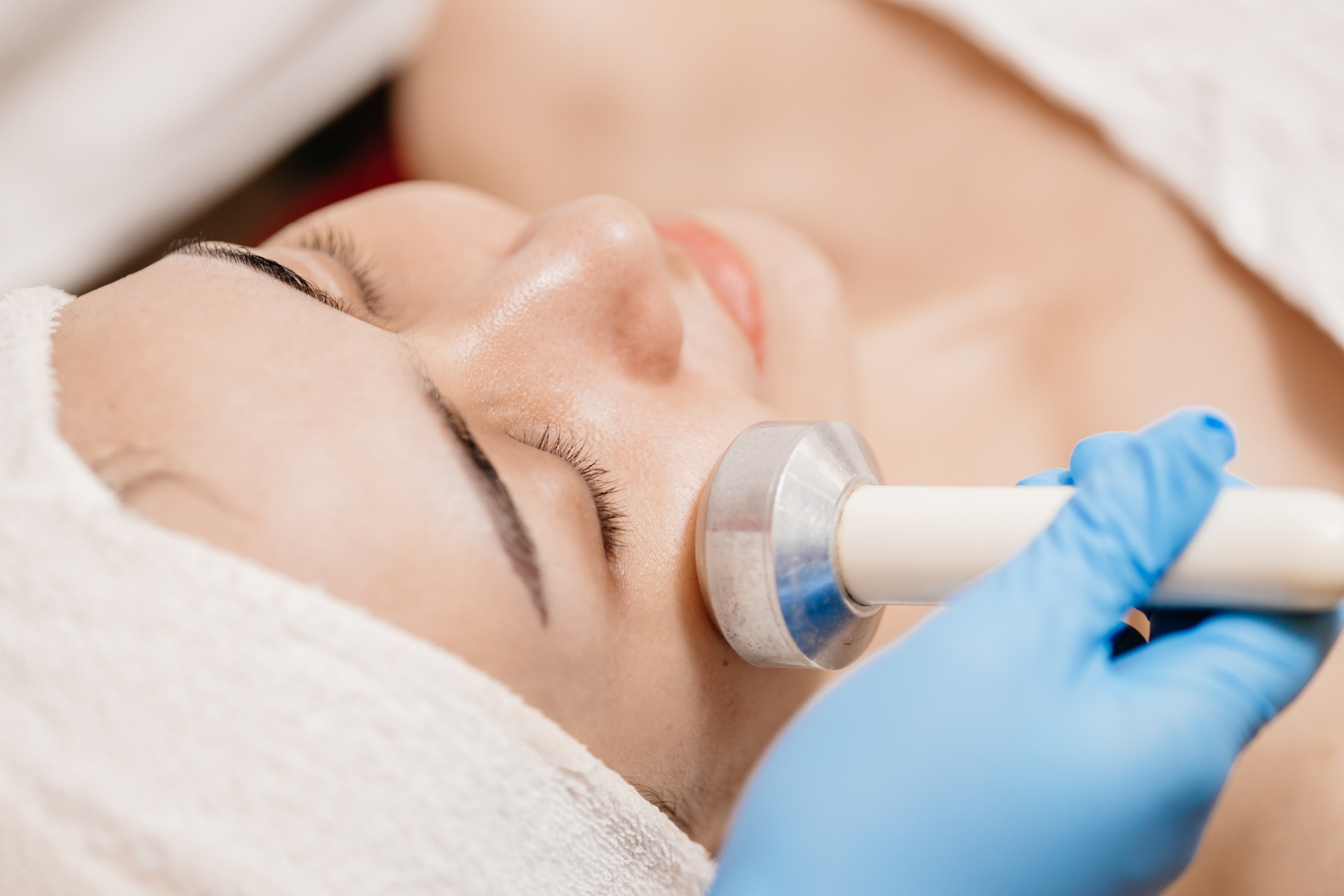
So, how do non-surgical eyelid treatments support firmness? The answer lies in modern skin technology. While each method works differently, most share a common goal, which is to encourage the skin’s natural ability to tighten, firm, and produce collagen around the delicate eye area.
Here are some of the most common options:
HIFU uses focused ultrasound energy to gently heat deeper layers of the skin. This heat may stimulate collagen production over time, which may help support firmer-feeling skin around the eyes, although responses differ between individuals.
May help with: Mild to moderate skin laxity or fine creasing.
What to expect: Some people may notice gradual changes over several weeks as collagen forms, depending on individual skin response and treatment parameters. There may be minimal downtime for most individuals.
Possible risks: Temporary redness, swelling, tingling or tenderness; in rare cases, transient nerve irritation.
Important notes: Suitability and outcomes vary depending on factors such as age, skin type, and treatment parameters.
Thermage delivers controlled radiofrequency energy to warm collagen-rich layers of skin. This may encourage existing collagen to contract and support new collagen formation.
May help with: Mild laxity, early signs of eyelid drooping or textural concerns.
What to expect: Warm sensation during treatment; gradual changes over weeks or months.
Possible risks: Redness, swelling, temporary sensitivity, or mild discomfort; results vary between individuals.
Important notes: A series of treatments may be recommended depending on goals and clinical assessment.
Fractional lasers work by creating controlled micro-injuries on the skin’s surface, prompting the body’s natural healing response and collagen production. This can help improve texture and the appearance of fine lines.
May help with: Crepey skin, fine lines, surface irregularities.
What to expect: Short recovery period with temporary redness, swelling or flaking.
Possible risks: Pigment changes, prolonged redness, irritation, or sensitivity.
Important notes: Stronger lasers may require more downtime and must be matched carefully to skin type.
Thread lifts involve placing fine, dissolvable threads just under the skin to provide gentle structural support. The threads may also stimulate collagen as they dissolve.
May help with: Mild skin laxity or subtle lifting needs.
What to expect: Minor swelling or bruising; results and comfort levels vary.
Possible risks: Bruising, swelling, visible threads, asymmetry or infection.
Important notes: Effects are temporary and depend on individual anatomy and healing.
Plasma devices use a focused electrical arc to create tiny points on the skin’s surface, which is designed to tighten superficial skin fibres and stimulate regeneration.
May help with: Mild laxity or fine surface lines.
What to expect: Several days of swelling or small scabs as the skin heals.
Possible risks: Pigment changes, scarring, prolonged redness or irritation.
Important notes: These treatments require careful candidate selection, especially for darker skin types.
Injectable treatments do not lift the eyelids directly, but they may restore volume or hydration in selected treatment areas. Dermal fillers may be used to provide volume in selected regions, while boosters can help improve surface hydration.
May help with: Fine lines, textural concerns or volume-related shadowing.
What to expect: Temporary swelling or bruising; results may be immediate or gradual depending on the treatment.
Possible risks: Bruising, lumps, swelling, asymmetry; in rare cases, vascular complications.
Important notes: Injectables require assessment by a suitably qualified practitioner due to potential risks.
Unlike surgery, the results of non-surgical eyelid lifts are not immediate and permanent. Instead, they develop gradually as your skin produces more collagen, with the full effect often visible after a few weeks or months. Most treatments last anywhere from 6 months to 2 years, depending on the method and your skin’s natural response.
Downtime is generally much shorter too. While surgical blepharoplasty can take weeks to recover from, non-surgical treatments usually only cause mild swelling, redness, or sensitivity that fades within days. For some people, shorter recovery periods may make non-surgical options more convenient, depending on suitability.
Non-surgical eyelid treatments may be suitable for individuals with mild to moderate skin laxity, early eyelid drooping, or crepey skin that may benefit from improved firmness or texture. These approaches can be considered by people who prefer gradual, subtle changes without the recovery period associated with surgery.
However, non-surgical methods have limitations. Individuals with significant excess skin, heavier eyelids, or more pronounced sagging may be advised that surgical blepharoplasty is more appropriate, as it can address excess skin more effectively in certain cases.
The most appropriate option depends on your goals, skin characteristics, and overall health. A qualified practitioner can assess your needs and help determine whether a non-surgical or surgical approach is better suited to your situation.
If you’re exploring non-surgical options for the eye area, the first step is to understand the different treatments available and whether they may be suitable for your skin concerns.
A consultation with a qualified practitioner can help clarify expected outcomes, potential risks, and the level of improvement each method may offer.
At Smile Place Dental & Aesthetics, we offer HIFU skin tightening for suitable candidates. Suitability, expected outcomes and risks will be assessed during a personalised consultation with a qualified practitioner.
1. How long does a non-surgical eyelid lift last?
Most treatments last between 6 months and 2 years, depending on the treatment, your age, and skin condition. HIFU and Thermage typically last closer to a year or more, while thread lifts and fillers may need top-ups sooner.
2. Is a non-surgical eyelid lift painful?
People describe the sensation differently. Some feel warmth or mild discomfort, while others may experience more sensitivity. Treatments like HIFU or Thermage may feel warm or tingly, while plasma or laser treatments can cause a stinging sensation. Numbing creams are often used to make the procedure more comfortable.
3. How quickly will I see results?
Changes from non-surgical eyelid treatments like HIFU tend to develop gradually. Some individuals may notice early changes, while others may take several weeks or months. The timing and degree of improvement vary between individuals, depending on factors such as skin type, treatment type, and age. Your practitioner can explain what is typical for the specific option recommended for you.
4. Can non-surgical eyelid lifts replace surgery?
Non-surgical treatments may be suitable for individuals with mild to moderate skin laxity or early changes in eyelid firmness. For those with significant excess skin or heavier eyelids, a surgical approach may be more appropriate. A qualified practitioner can help determine which method aligns best with your needs.
5. What’s the recovery time like?
Recovery varies depending on the treatment type and individual skin response. Many non-surgical options involve temporary redness, swelling, tenderness or sensitivity that settle within days. Your practitioner will outline the expected recovery specific to your treatment plan.

Dr Arathy Rao has over a decade of experience with a range of skills and knowledge in all aspects of dentistry.


.png)